To study the Bible, read a passage, ask questions, and write down what you find. SOAP focuses on one verse and four short entries. Inductive Bible study works through a whole passage: observe, interpret, apply. Journaling is a way to record your reading that works with either method. Below, all three use Psalm 1: six verses and less than a minute of English audio.
| Method | Time to set aside | What you leave with | Best for |
|---|---|---|---|
| SOAP | about 15 minutes | one verse, a reflection, and a prayer | daily devotional study |
| Inductive study | 30 minutes or more, split across sessions if needed | an understanding of the whole passage | a closer look at the text |
| Journaling | 5–10 minutes after reading | notes you can return to | alongside either method |
New to the Bible? How to Start Reading the Bible helps you choose where to begin. These methods give you a way to slow down once you have a passage in front of you.
First, read and listen to the chapter
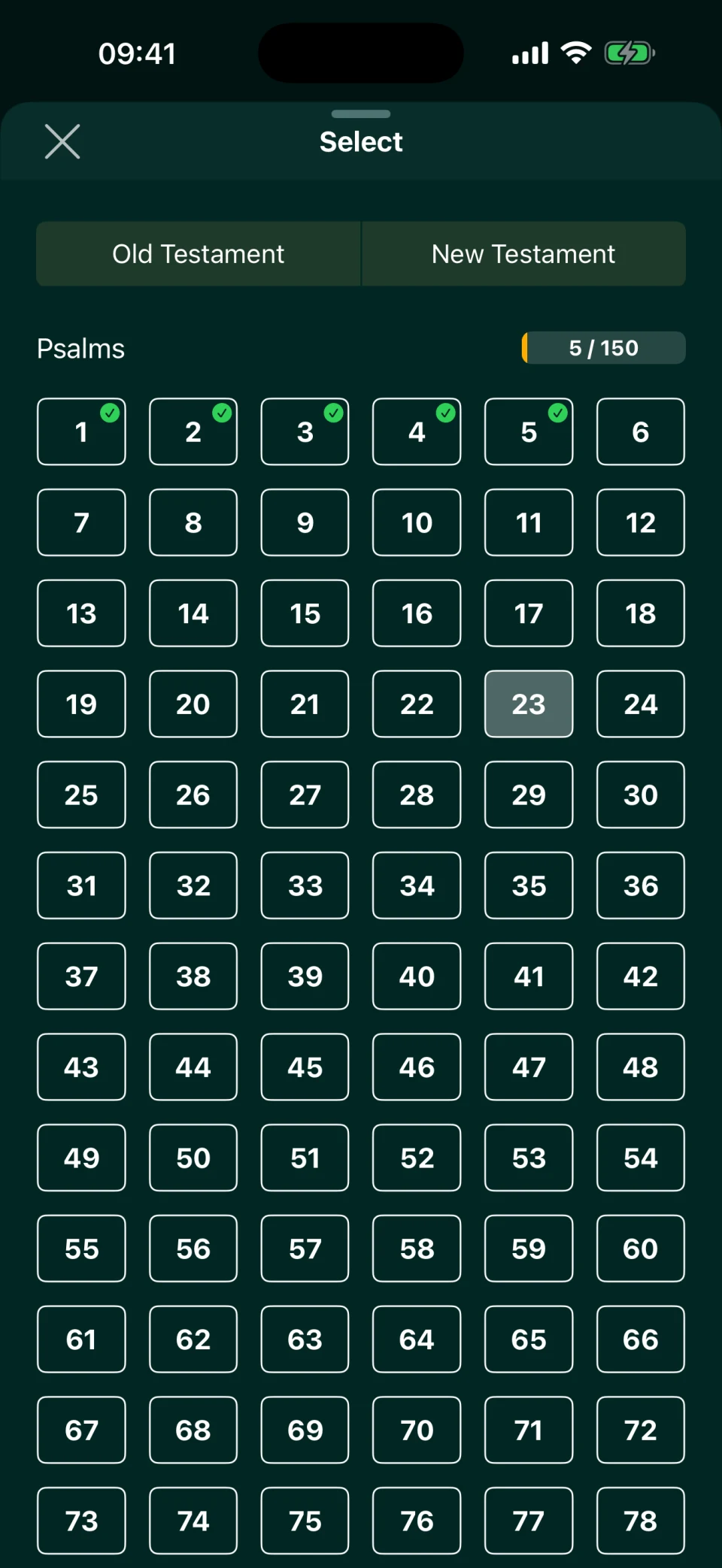
Every method starts with the text. Here is Psalm 1 in the Berean Standard Bible (BSB):
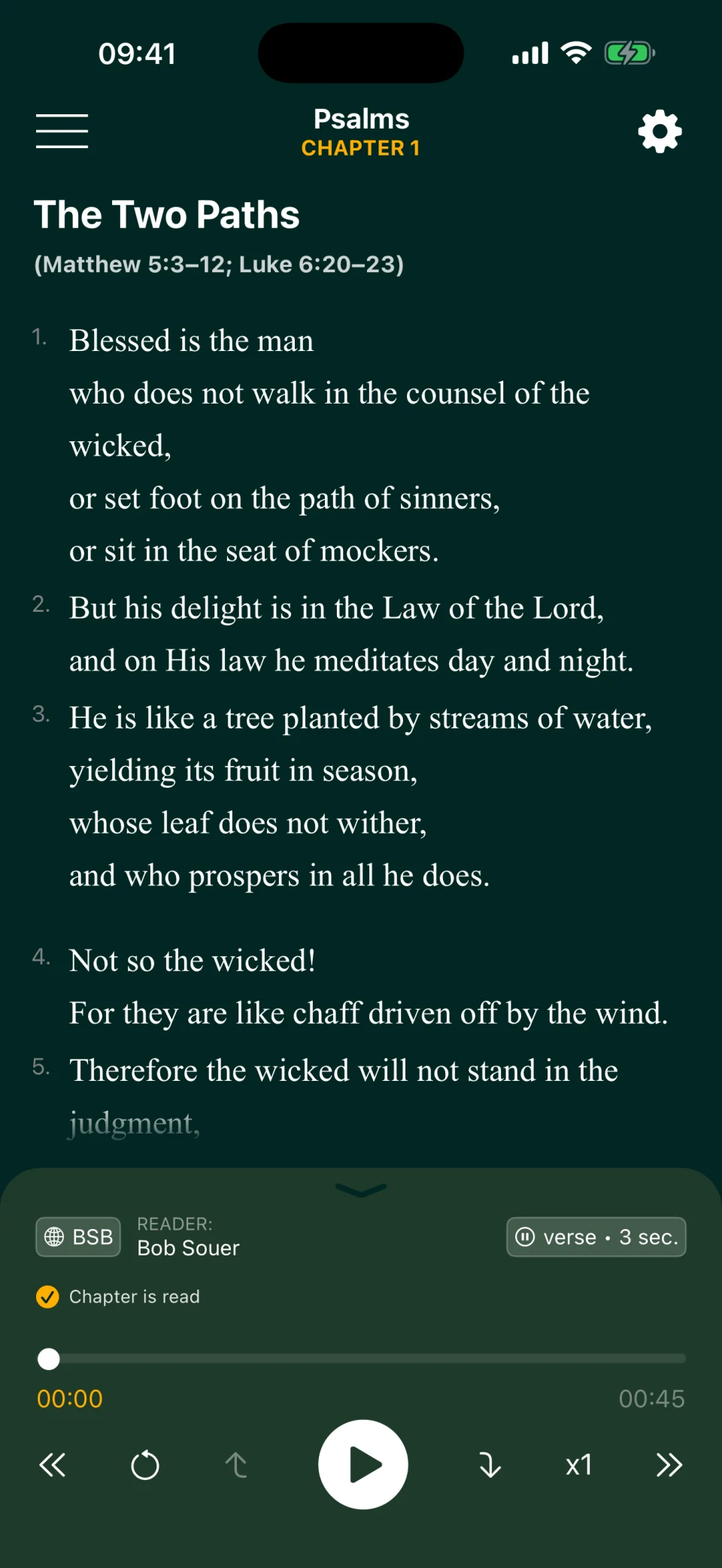
¹ Blessed is the man who does not walk in the counsel of the wicked, or set foot on the path of sinners, or sit in the seat of mockers. ² But his delight is in the Law of the Lord, and on His law he meditates day and night. ³ He is like a tree planted by streams of water, yielding its fruit in season, whose leaf does not wither, and who prospers in all he does. ⁴ Not so the wicked! For they are like chaff driven off by the wind. ⁵ Therefore the wicked will not stand in the judgment, nor sinners in the assembly of the righteous. ⁶ For the Lord guards the path of the righteous, but the way of the wicked will perish.
Read it slowly, then listen. In the free Bible Garden app for iPhone and iPad, Psalm 1 takes about 46 seconds in BSB, read by Bob Souer, or 53 seconds in the World English Bible (WEB), read by Winfred Henson. Hearing it can draw your attention to rhythm, repeated words, or a sentence you skimmed on the page.
The SOAP Bible study method: one verse, four entries
Wayne Cordeiro, founding pastor of New Hope in Honolulu, developed SOAP. His church uses it for daily journaling alongside a yearly Bible reading plan (New Hope); he describes it in The Divine Mentor (2007). The letters stand for:
- S — Scripture. Read a passage and write out a verse that catches your attention.
- O — Observation. What does the verse say? What stands out?
- A — Application. How does this speak to your life today?
- P — Prayer. Write a short prayer in response.
Here is a SOAP entry for Psalm 1:
- S: “On His law he meditates day and night” (Psalm 1:2, BSB).
- O: This person keeps returning to God's law, rather than reading it occasionally. The first half of the verse calls it his “delight”; WEB uses the same word. This is more than checking off a duty.
- A: I read in the morning but forget the passage by lunch. Today I'll keep one verse with me and return to it at lunch and before bed.
- P: “Lord, help me find delight in your word, rather than treating it as another task.”
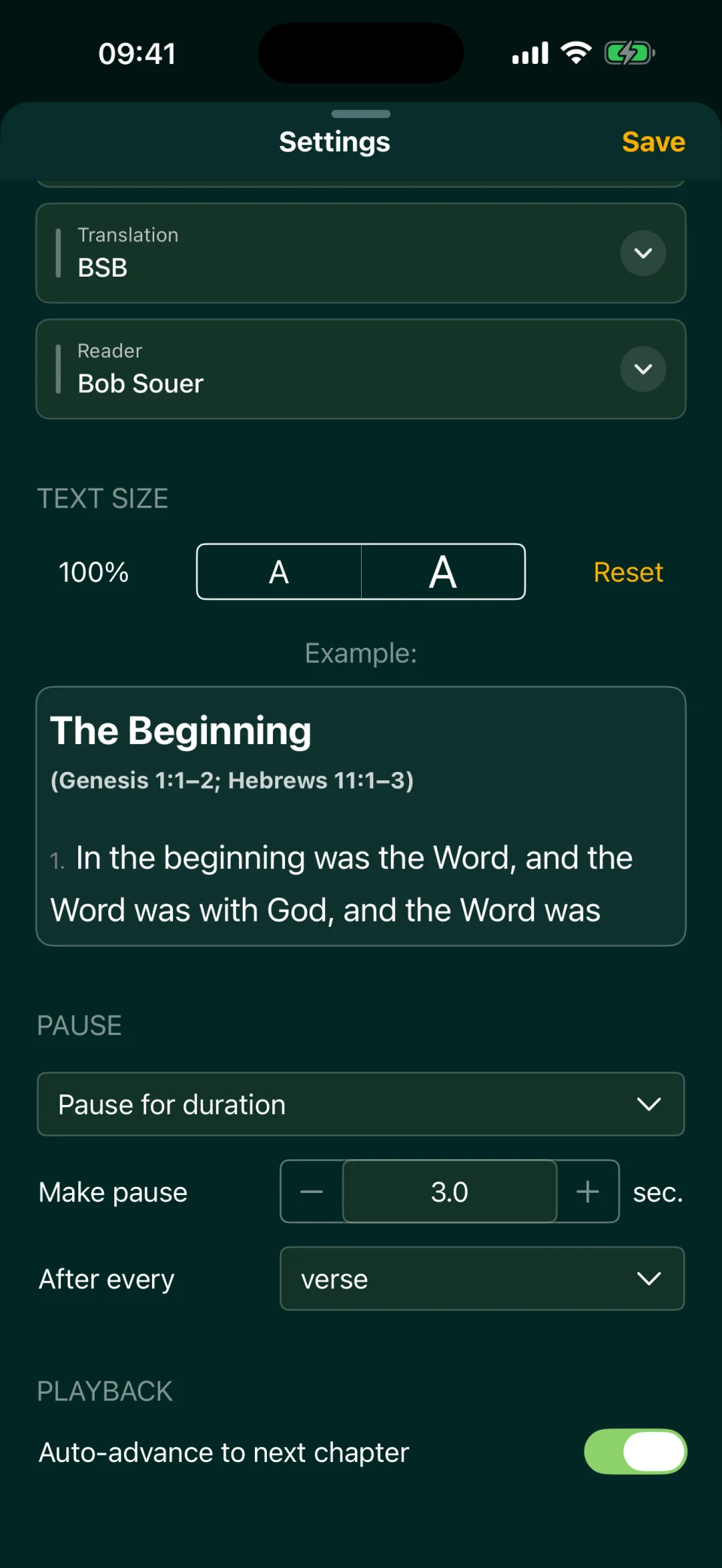
Audio with pauses can help. In Classic Reading settings, under Pause, choose to pause until you press Play after each verse. You can write without the next verse starting. The previous/next verse arrows take you precisely to the start of a verse when you want to hear it again.
SOAP also fits a reading plan: read the day's chapters, then make one entry about a verse that stood out. See How to Read the Bible in a Year for a ready-made plan.
Inductive Bible study: observe, interpret, apply
The method grew out of American seminaries: William Rainey Harper and his student Wilbert White, who founded the Biblical Seminary in New York in 1900, helped develop it. Robert Traina systematized it in Methodical Bible Study (1952) (history of the method). Kay Arthur helped bring it to everyday readers (Precept). “Inductive” means building your understanding from the details of the passage.
1. Observation: what does it say? Ask who, what, when, where, why, and how. Look for repetitions and contrasts. In Psalm 1:
- verse 1 moves through three actions: “walk,” “set foot,” and “sit” in BSB; WEB says “walk,” “stand,” and “sit”;
- “path” appears at the beginning and end, in verses 1 and 6, alongside “way” in verse 6;
- a tree beside water (verse 3) contrasts with chaff blown away (verse 4);
- in WEB, “stand on the path of sinners” in verse 1 and “stand in the judgment” in verse 5 use the same verb in different settings.
2. Interpretation: what does it mean? Consider the context, related passages, and other translations:
- Cross-references. Joshua 1:8 also speaks of meditating on the law “day and night.” Jeremiah 17:7–8 describes a person who trusts in the Lord as a tree planted by water; Psalm 92:12 in BSB compares the righteous to a flourishing palm tree. These passages help you explore the imagery. In Bible Garden, BSB lists Matthew 5:3–12 and Luke 6:20–23 under the heading “The Two Paths”; this psalm has no footnote to tap. Open the other passages separately.
- Another translation. BSB says the Lord “guards” the path of the righteous in verse 6; WEB says Yahweh “knows” their way. Comparing them raises a question: is this knowing simply awareness, or does it suggest care? Both translations use “chaff” in verse 4: the light husks separated from grain during winnowing, easily carried away by wind.
- Names and notes. WEB uses “Yahweh” in verse 2 where BSB uses “the Lord.” WEB has a footnote about the divine name. Footnotes open on tap in Classic Reading, where available; they are not shown in Multi Reading.
3. Application: how will I respond? Make it specific. For example: “Whose advice shapes my decisions? Before an important decision this week, I'll reread Psalm 1 and consider which path I'm following.”
You can spread the work out: observation on Monday, interpretation on Tuesday, application on Wednesday.
Compare translations verse by verse
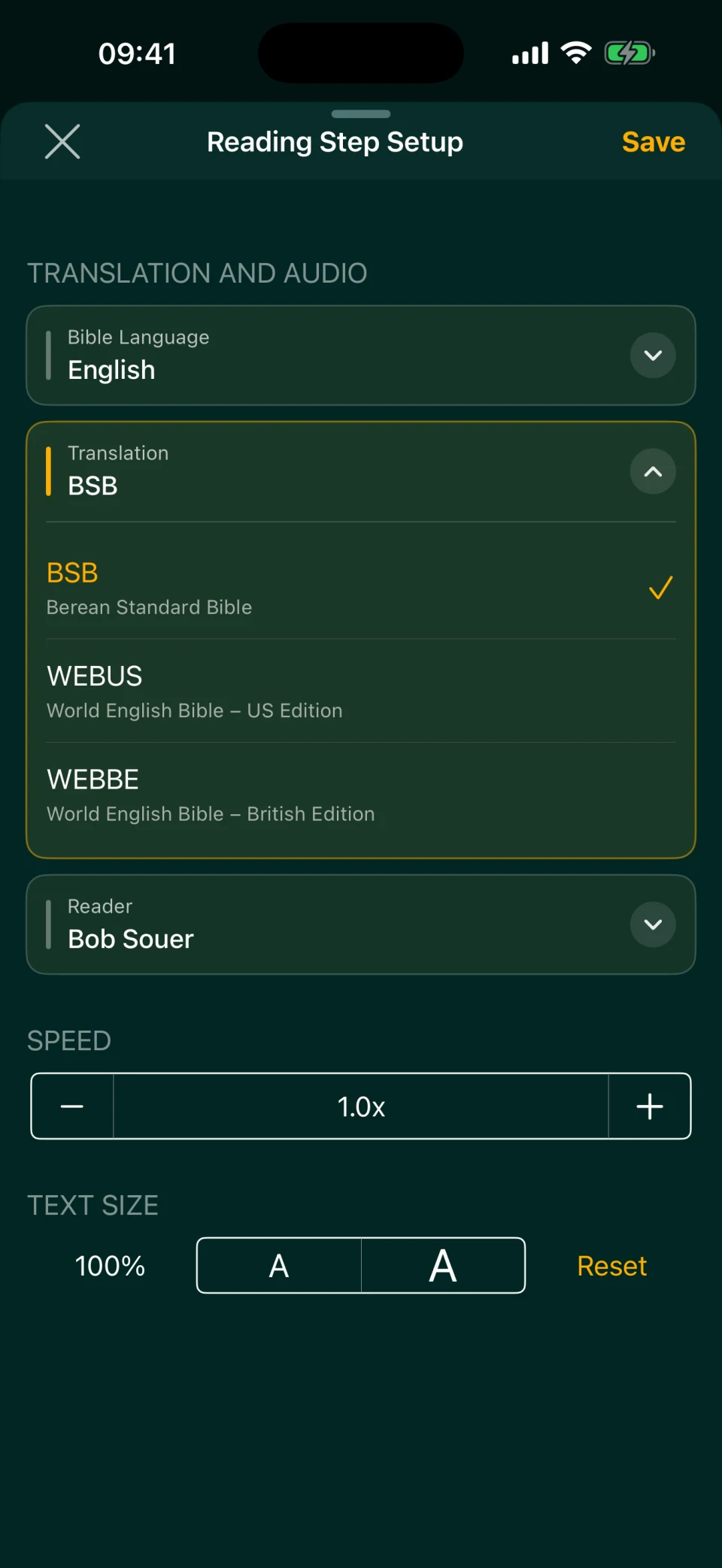
Multi Reading is Bible Garden's main feature. Each verse plays in several translations in sequence, with the same verse in the other translations displayed beneath it. For Psalm 1, set up reading → pause → reading → pause: BSB (Bob Souer), a 2-second pause, WEB (Winfred Henson), another 2-second pause. Choose the verse unit. At normal speed, the psalm takes about 1¾ minutes, including the pauses. You'll hear differences such as “guards” and “knows,” or “mockers” and “scoffers,” while both versions are on screen.
The translations play one after another. You can also choose a paragraph, a section, or a whole chapter as the unit, and set a separate speed for each reading step. Switch to Classic Reading when you need footnotes for interpretation.
Psalm 1 has six matching verses in BSB and WEB. With other translation pairs, check chapter and verse numbering before comparing psalms verse by verse. Multi Reading also works across languages; see Bilingual Bible App for setup. For differences between available translations, see Which Bible Translation Should I Choose?.
Bible journaling: write down what you read
“Bible journaling” often means drawings, lettering, or color in a wide-margin Bible. You don't need artistic skills for a study journal. Here, journaling means written reflection in a notebook or a notes app, alongside either SOAP or inductive study.
Four things are enough for an entry: the passage and translation, a verse that stood out, an unanswered question, and one action. For example:
October 5. Psalm 1, BSB and WEB.
Verse: “He is like a tree planted by streams of water” (verse 3, BSB). The tree doesn't chase water; it grows where it has a steady supply.
Question: why does the psalm begin with what the blessed person doesn't do?
Action: tonight, spend ten minutes with this psalm instead of scrolling through the news.
A month later, these entries let you see how your understanding has changed. Unanswered questions can become topics for a study group or a conversation with your pastor.
Bible Garden has no notes or bookmarks, so keep your journal on paper or in a notes app.
Guiding questions in Lampada
 Lampada — our second app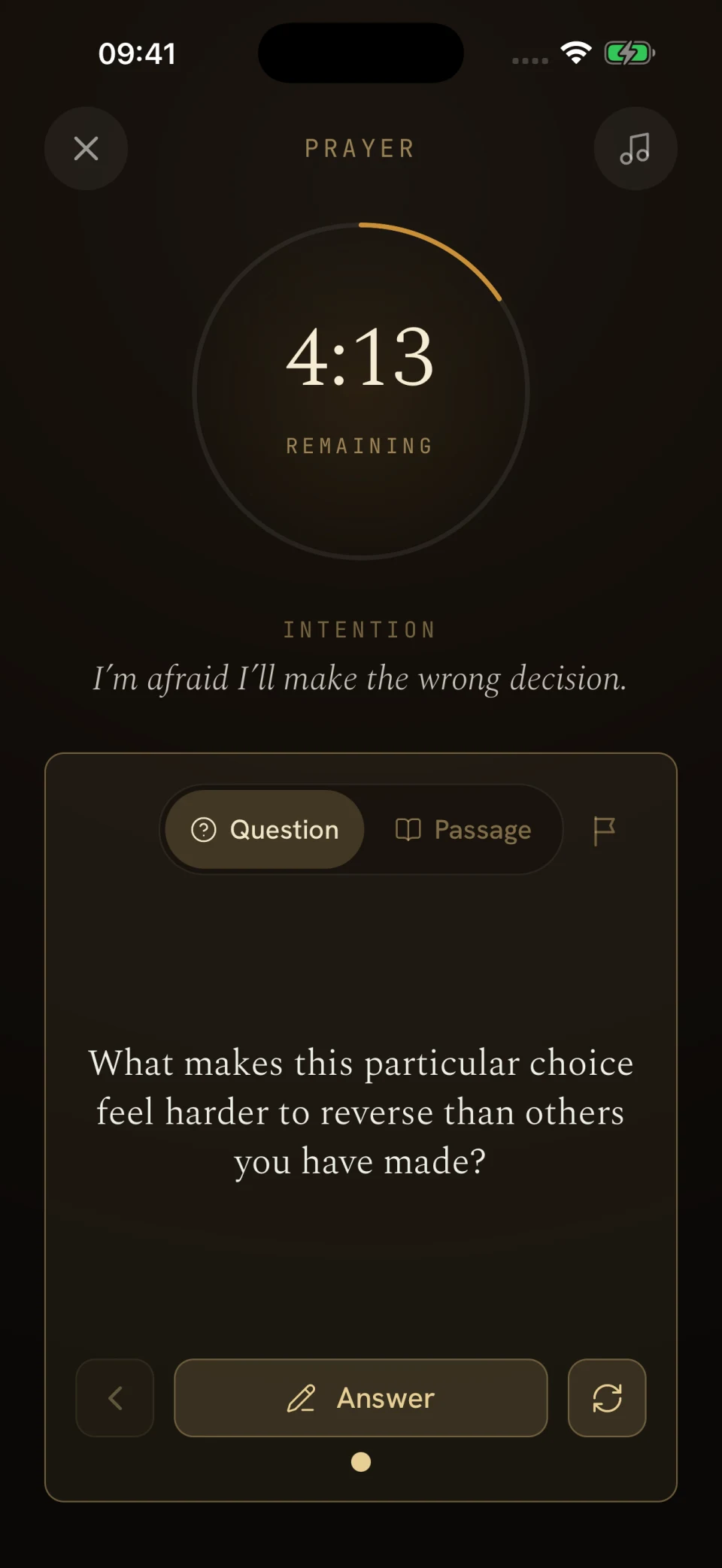
We're building a second app for journaling and prayer: Lampada, coming soon to the App Store. You choose a theme and a prayer duration; guiding questions help you focus and turn a general reflection into a specific response.
For SOAP, this will support the prayer step: you can choose a theme based on the verse you wrote down, such as Psalm 1:2. Lampada also selects Scripture passages by meaning, which can complement cross-references during inductive study. Observation and interpretation still begin with the text itself.
A reflection journal in Lampada
Lampada — our second app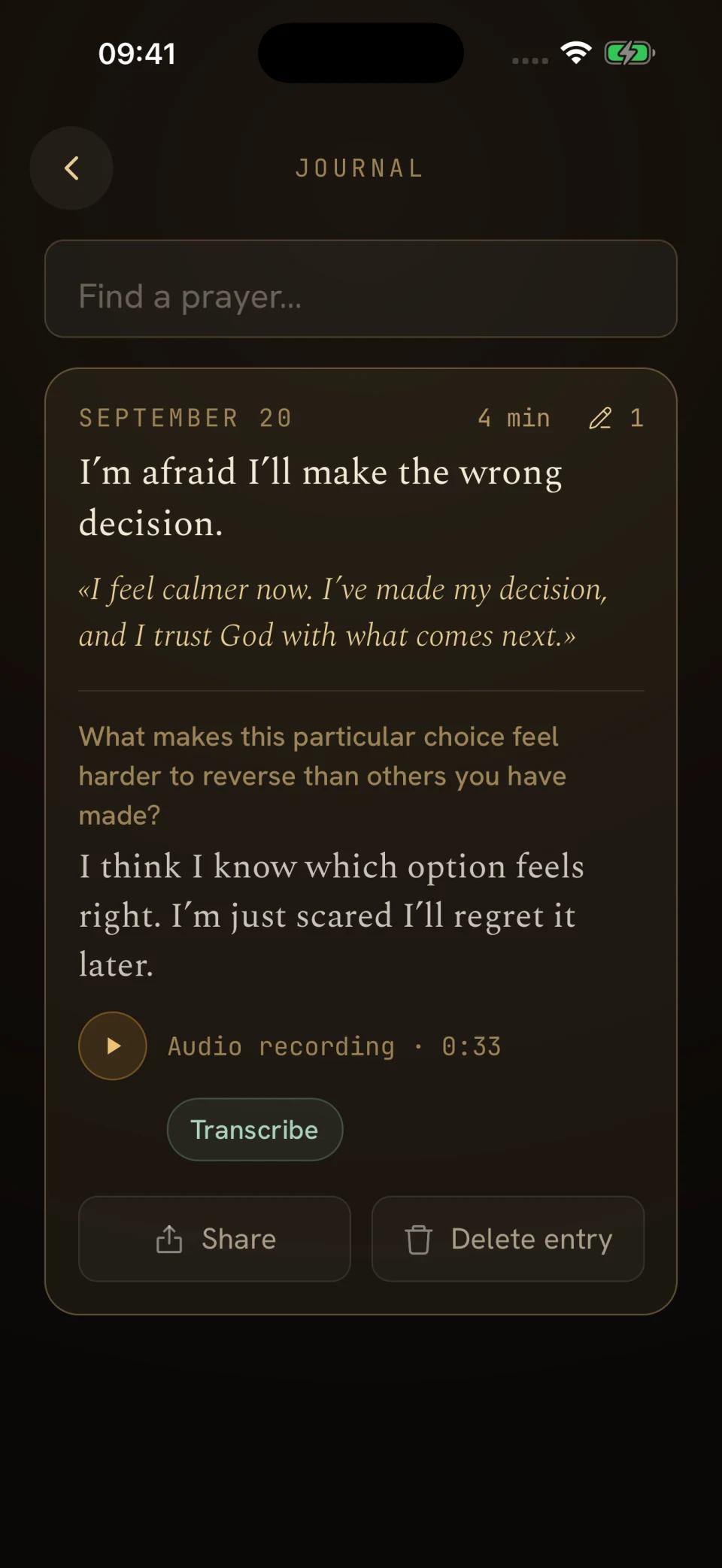
Lampada's personal journal on your device will let you save written or voice reflections, prayer summaries, and favorite verses. You can keep them together and return to them after studying a passage.
Until Lampada is released, use a notebook or your phone's notes app.
Track progress when one chapter takes several days
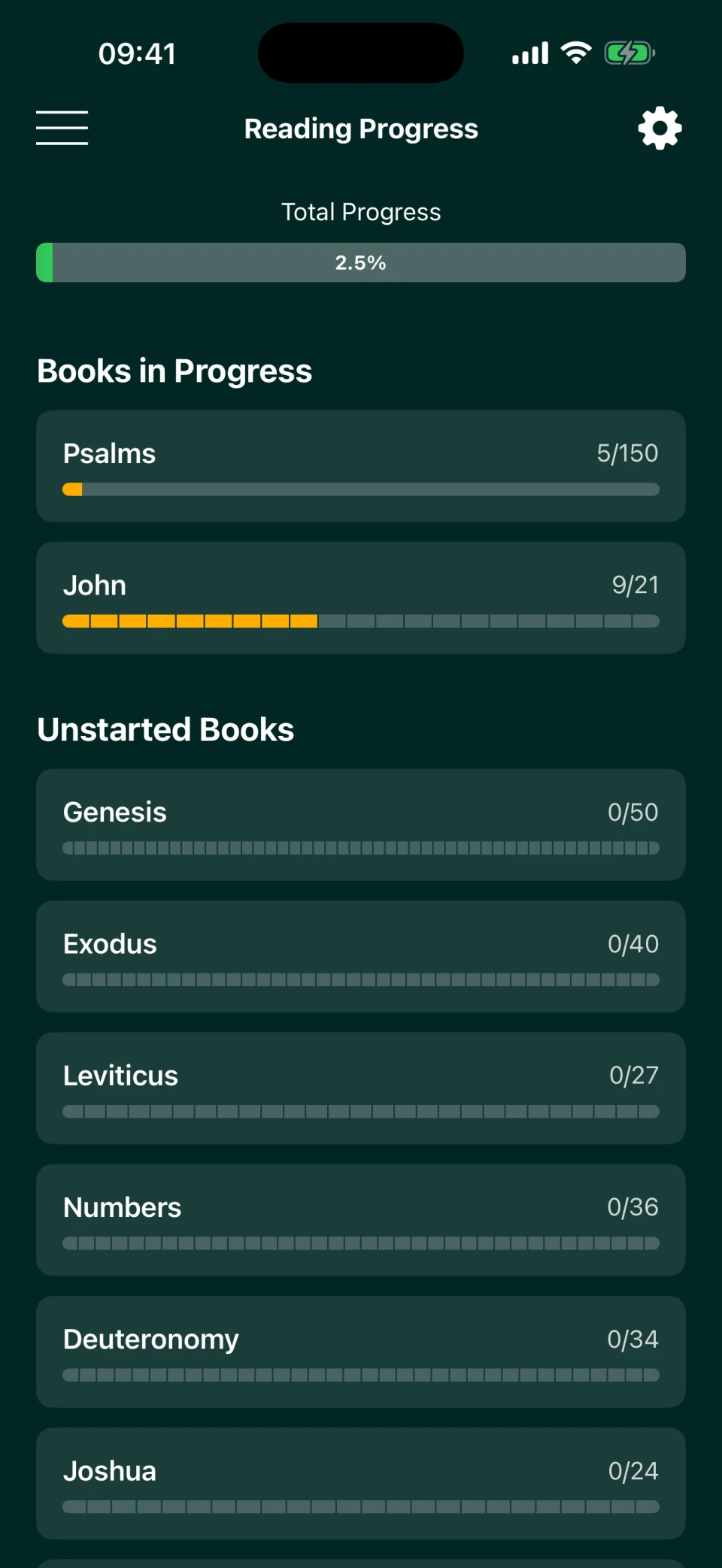
Studying one chapter over several days is normal. Bible Garden marks a chapter automatically when you've listened to 90% of its audio (the default threshold) or read its text to the end. You can also mark it manually. The progress screen shows the percentage of the Bible you've covered and the books you're currently reading.
If study is part of your daily reading, the event → place → action rule in How to Read the Bible Every Day can help you keep coming back. For tracking outside the app, see Bible Reading Tracker.
Frequently asked questions
How is Bible study different from Bible reading?
Reading moves through a book, chapter by chapter. Study slows down on a passage: you ask questions, compare it with other Scripture, and write down your conclusions. Both matter: reading helps you see the whole, while study helps you understand the details.
Which Bible study method is best for beginners?
Start with SOAP. It's short and leaves you with one verse, one reflection, and a prayer. Try inductive study when you want to understand a passage more fully. A written journal works with either.
Which passage should I study first?
Choose something short and complete: Psalm 1, Psalm 23 (“The Lord is my shepherd” in BSB), or a parable from Luke 15. A passage of 5–20 verses is manageable for inductive study.
Do I need a Bible commentary?
A commentary can help. Try observing and thinking through the passage yourself first, then consult one, so its explanation doesn't replace your own reading. Bible Garden has text, available footnotes, and audio; it has no commentaries.
What should I do when translations differ?
Write down both wordings and check any translator notes. For Psalm 1:6, compare BSB's “guards” with WEB's “knows,” then read the rest of the psalm for context. A difference can point to shades of meaning worth exploring; it doesn't by itself settle which rendering is better. If the question remains, consult a commentary or someone familiar with the original languages.
Does Bible Garden have notes, bookmarks, or an Android version?
It has no notes or bookmarks; use paper or your phone's notes app. Bible Garden runs on iPhone and iPad. A web version and Android are in our plans.