This isn't a reading plan or today's passage. It's about making Bible reading part of every day. Start with one rule and fill it in for yourself:
Event → place → action
For example: "After breakfast, at the kitchen table, I read one chapter of Mark." Or: "When I start my commute, I listen to one chapter." Below is how to choose the moment, the place, and the amount, and what to do when a day slips by. If you want a ready-made schedule, see How to Read the Bible in a Year.
Write your own rule
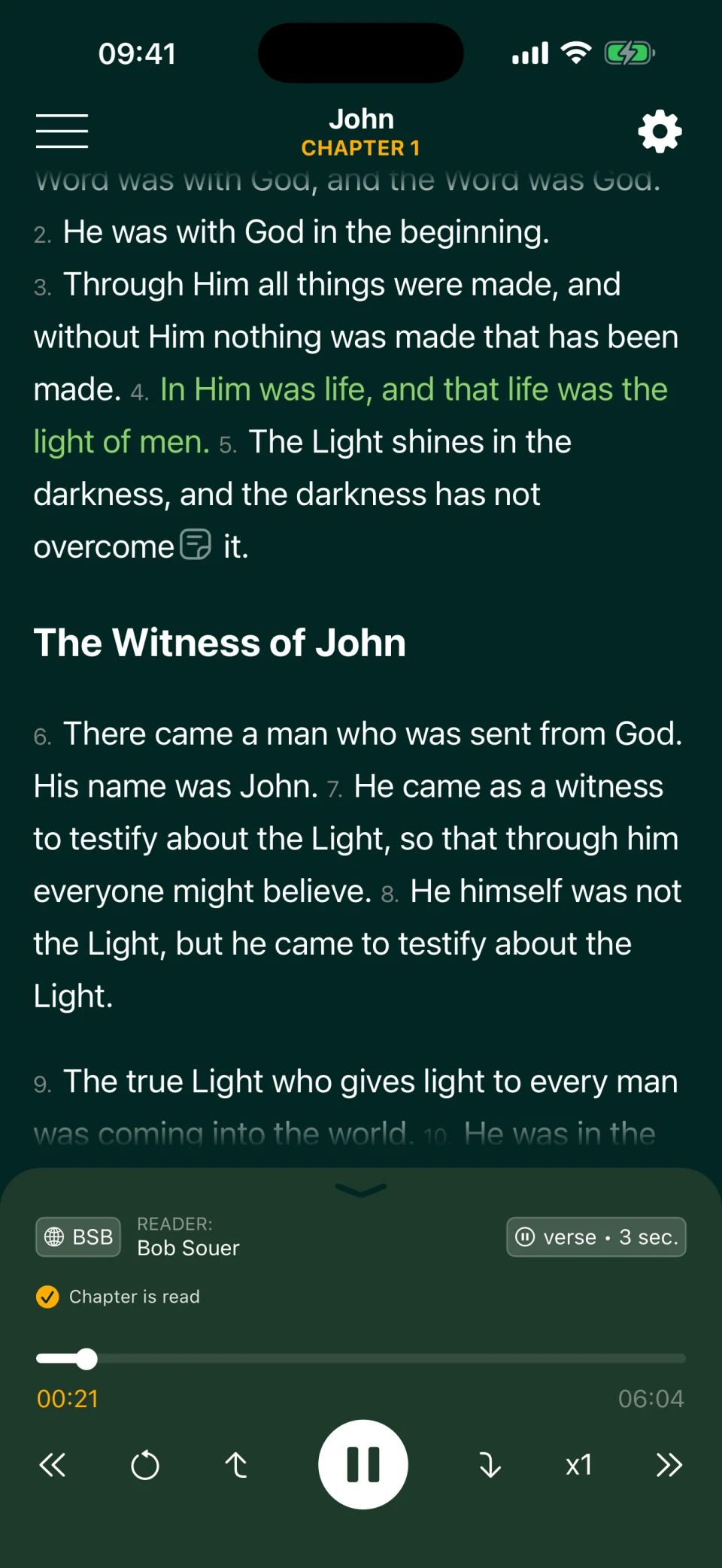
"I'll read the Bible every day" is a good intention, but it doesn't say when. It helps to tie the action to a situation in advance: "When X happens, I'll do Y." Psychologist Peter Gollwitzer describes these if-then plans as a way to move from intention to action (Gollwitzer, 1999). They're no guarantee, but they're simple and worth a try.
How to fill in the rule:
- Event: something you already do every day at about the same time: morning coffee, the drive to work, lunch, the moment the kids fall asleep. Habit researchers recommend repeating an action in the same context, such as after breakfast (Gardner, Lally & Wardle, 2012).
- Place: somewhere without distractions: a chair by the window, the kitchen table, your seat on the train.
- Action: a specific book and amount, not "something." Then you don't have to decide what to open each time.
Bible Garden doesn't send reminders, and this is where the rule does the work: the cue is an event in your day, not a notification. If the rule hasn't worked for a week, don't blame yourself; change the cue. Maybe mornings are too hectic and evenings are calmer.
Choose a manageable amount rather than a deadline
A habit grows from repetition, not volume. Pick what you can manage even on your busiest day: a chapter, half a chapter, even a single paragraph. Simple actions become habitual faster than complex ones (Gardner et al., 2012). If you have energy left, keep going, but keep the required part small.
Read one book straight through rather than random verses. The text adds up to a story, and tomorrow you'll know where to pick up. If you stop mid-chapter, jot down the verse number in your phone's notes; the app has no bookmarks.
New to the Bible? How to Start Reading the Bible suggests where to begin. Want to read all of it? Take the one-year plan and open today's reading.
Listen on the go
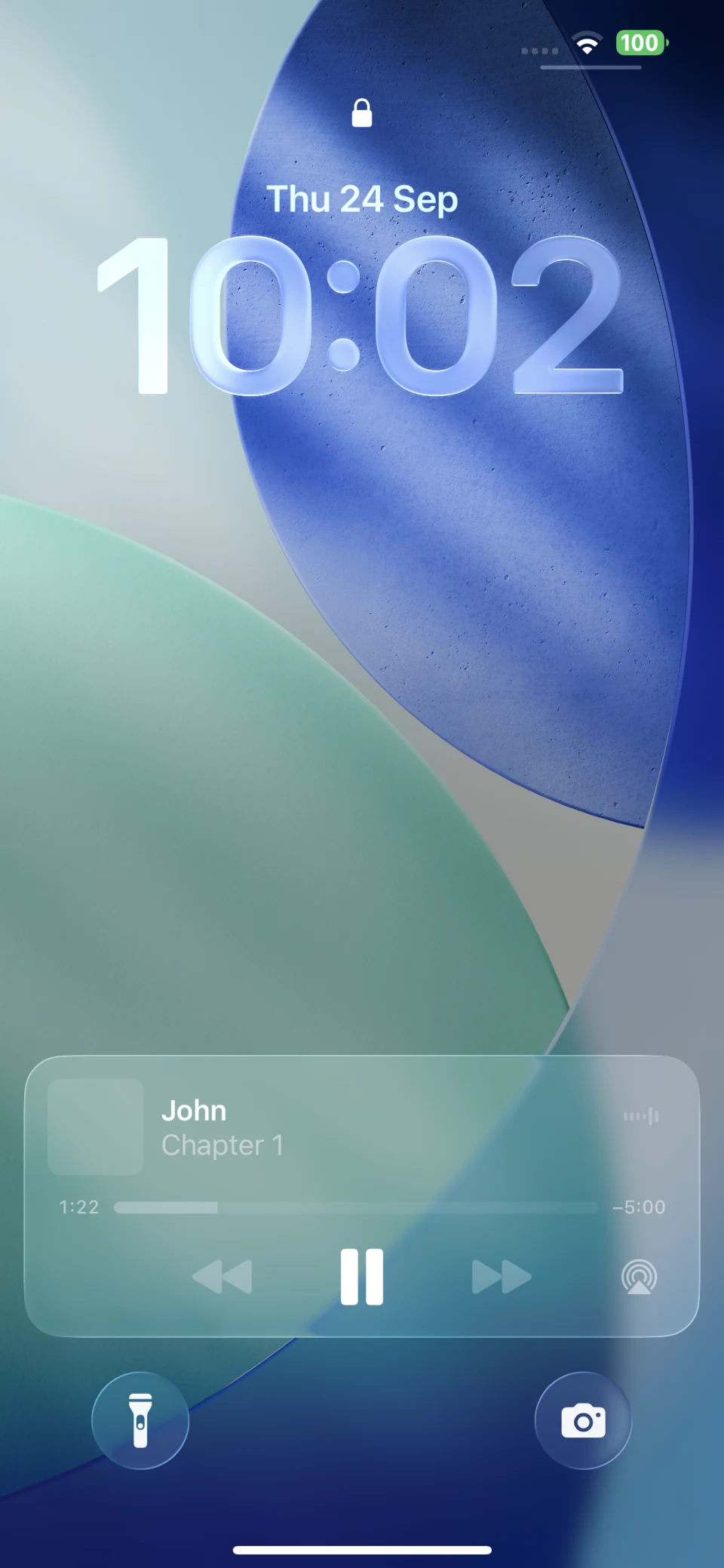
Finding time to sit and read can be hard; finding time to listen is often easier: on a commute, behind the wheel, on a walk, while doing the dishes. Then the rule becomes: "When I leave the house, I listen to one chapter."
In Bible Garden for iPhone and iPad:
- audio keeps playing in the background, and you can pause and resume it from the lock screen;
- the next chapter starts automatically, and you can turn that off if you want to stop after one;
- you choose the narrator: Bob Souer and David read the Berean Standard Bible (BSB), and Winfred Henson reads the World English Bible (WEBUS). You can hear a sample before choosing; learn more in Audio Bible Narrators.
Listening requires an internet connection; you can't download audio ahead of time yet. The app is free, with no ads; a web version and an Android app are in our plans.
Make room to think
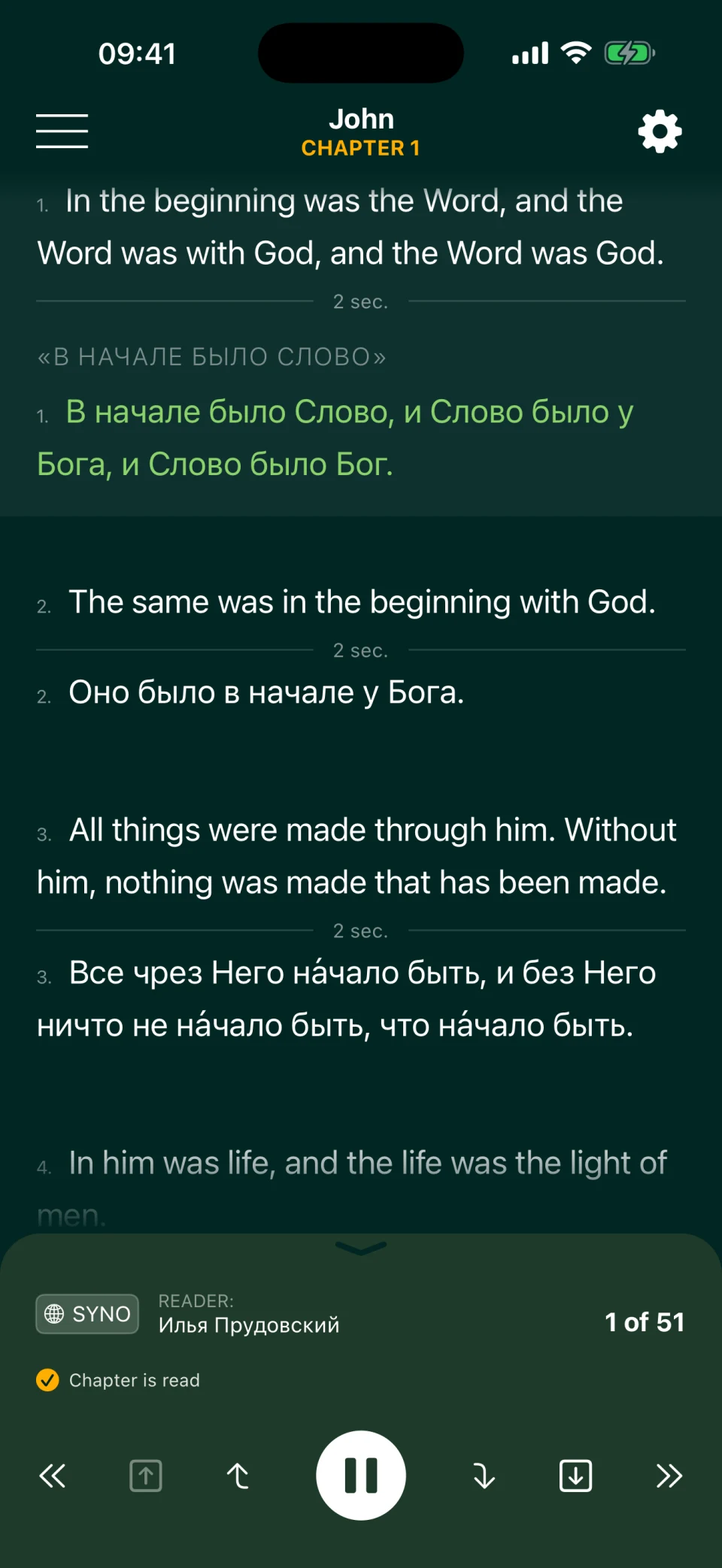
Daily listening can easily become background noise: the chapter played, but you can't recall what was in it. Pauses help you slow down. In Bible Garden you can add a pause after each verse, paragraph, or section, for a few seconds or until you tap Play, so you have time to think about what you heard.
Multi Reading is Bible Garden's key feature. Each verse plays in several translations in a row, with a pause between them: for example, BSB read by Bob Souer, then WEBUS read by Winfred Henson. You can also mix languages, such as English followed by Russian or Ukrainian, and the same verse in the other translation appears beneath it on screen. When you hear a verse twice in different words, you naturally linger on it. Learn more in Bilingual Bible App.
Two translations take about twice as long, so for a daily rule Multi Reading works best on a short passage rather than several chapters.
To turn those pauses into a closer look at the passage, try SOAP, inductive study, or journaling, with worked examples on Psalm 1.
Progress tracks itself
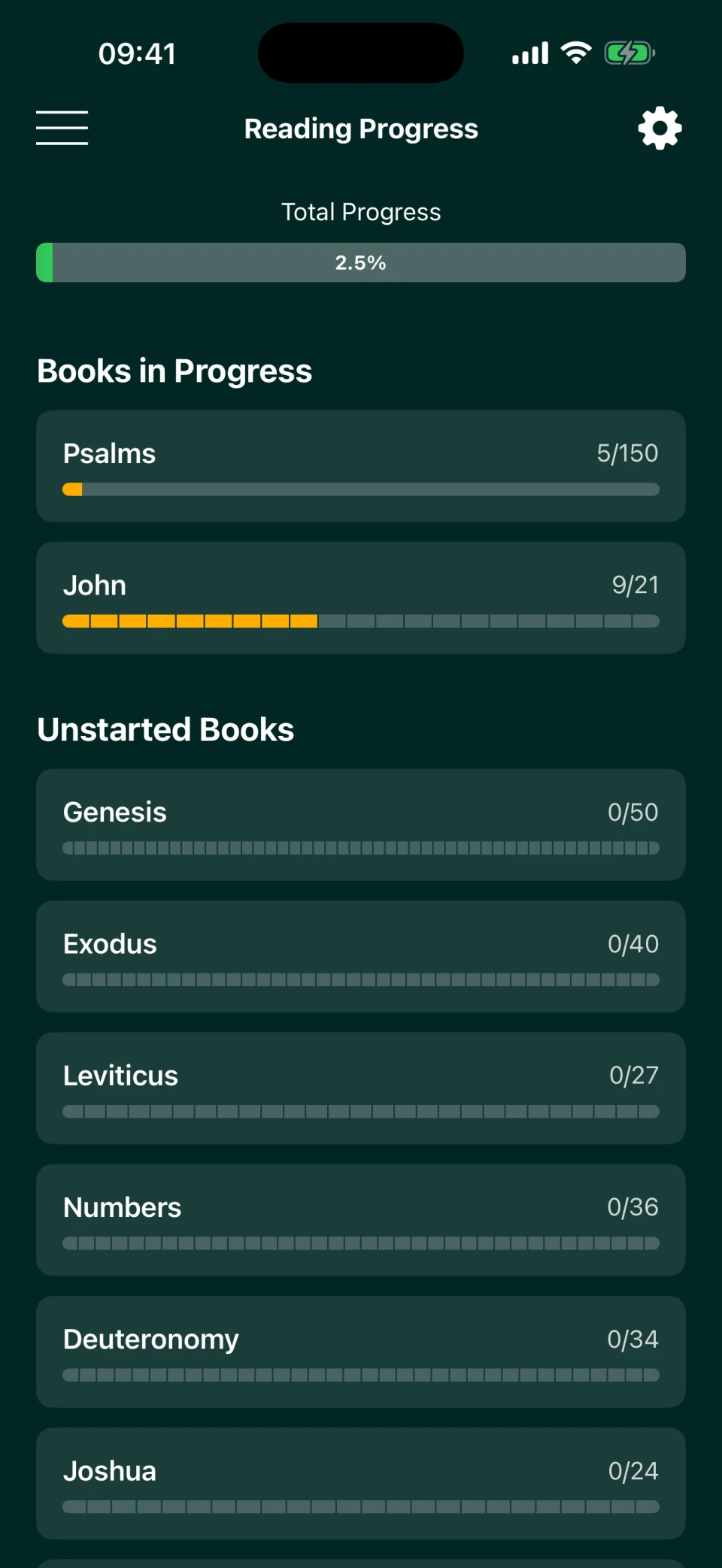
No checkboxes needed in Bible Garden. A chapter counts as read automatically when you've listened to 90% of its audio (the default threshold) or read its text to the end. The progress screen shows how much of the Bible you've covered, which books you're reading now, and which ones you've finished.
That helps a habit: you see what you've done, not just what's left. With five chapters of Mark behind you, the sixth is easier to open.
Two caveats. It isn't a streak counter: the app counts chapters, not consecutive days, so a missed day doesn't reset anything. And a mark doesn't measure attention: a chapter counts even if your mind wandered. If you read half a chapter at a time, the mark appears when you reach the end of the chapter; you can also mark a chapter manually.
Missed a day? Just come back
You will miss days: illness, travel, a hard week. In a study by Phillippa Lally and colleagues, missing one opportunity did not materially affect habit formation (Lally et al., 2010). So after a miss you don't need to start over or catch up with a double portion. When your chosen cue next occurs, pick up where you left off. If misses keep happening, adjust the rule: choose a different cue or a smaller amount.
"Daily Bible reading" can mean different practices:
- reading straight through: book by book, at your own pace or with a plan. That's what this article is about.
- devotionals: a short passage with an author's reflection for each day, from devotional books or apps. Bible Garden doesn't include them.
- lectionary readings: passages a church assigns to each date.
They don't exclude one another, and the rule at the top works for any of them.
Frequently asked questions
How long does it take to build a habit?
It varies. In Lally and colleagues' study (2010), participants repeated a simple daily action related to eating, drinking, or physical activity. By the authors' model, the action took anywhere from 18 to 254 days to approach each person's own maximum level of automaticity. That's not a deadline for a Bible reading habit, and the popular "21 days" figure has no scientific basis. What matters is coming back to your reading again and again.
What should I do if I miss a day?
Pick up where you left off, without doubling up. According to Lally and colleagues (2010), a single miss doesn't materially affect habit formation. If you miss often, change the time or shrink the amount.
Is it OK to start with one paragraph?
Yes. A paragraph every day beats a chapter once a week. Take a connected passage from the book you're reading straight through, and note where you stopped. Once reading feels routine, you can increase the amount.
Can I listen to the Bible instead of reading it?
Yes. For many people, audio is the most realistic way not to skip days: on a commute, behind the wheel, on a walk. To keep listening from turning into background noise, set pauses after verses or paragraphs in Bible Garden.
Do I need a reading plan, and how is it different from a devotional?
No, you don't need one. A plan helps if you want to read the whole Bible by a certain date; there's one in How to Read the Bible in a Year. A devotional is a short passage with commentary for each day, while reading straight through means the book itself, chapter by chapter. For a habit, a steady time and a manageable amount matter more than the format.
How does Bible Garden track what I've read?
Automatically: a chapter counts when you've listened to 90% of its audio (the default threshold) or read its text to the end, and you can also mark a chapter manually. The progress screen shows your percentage of the whole Bible and the status of each book. The app has no built-in reading plans or reminders.