A red-letter Bible prints the words Jesus speaks in the New Testament in red so they are easy to find on the page. Louis Klopsch, an American publisher, came up with the idea in 1899. The color is an editor's aid, not part of the biblical text, and editions do not always agree on where Jesus' words begin and end. In the free Bible Garden app for iPhone and iPad, the words of Jesus are in red in all seven translations, including the Berean Standard Bible (BSB) and both editions of the World English Bible (WEB). Below: where the tradition came from, why some people object to it, and the passages where editions part ways.
Where red letters came from
On June 19, 1899, Louis Klopsch, editor of The Christian Herald in New York, was writing an editorial when his eye fell on Luke 22:20: "This cup is the new testament in my blood, which is shed for you" (King James Version, not in the app). Struck by the image of blood, he asked his mentor, the preacher T. De Witt Talmage, whether Christ's words could be printed in red. Talmage replied: "It could do no harm and it most certainly could do much good" (Bible Collectors' World, 1986).
A red-letter New Testament came out the same year in a first printing of 60,000 copies, which soon sold out; a complete red-letter Bible followed in 1901 (Wikipedia, Christian Today). Jesus' words in Acts and Revelation were included. Old Testament appearances of God that many interpreters see as Christ were deliberately left in black.
Scribes had used red ink long before, for headings and opening letters. But red-letter Bibles became familiar only after Klopsch, and today many publishers offer red-letter editions (Christian Today).
Why print Jesus' words in red, and why some object
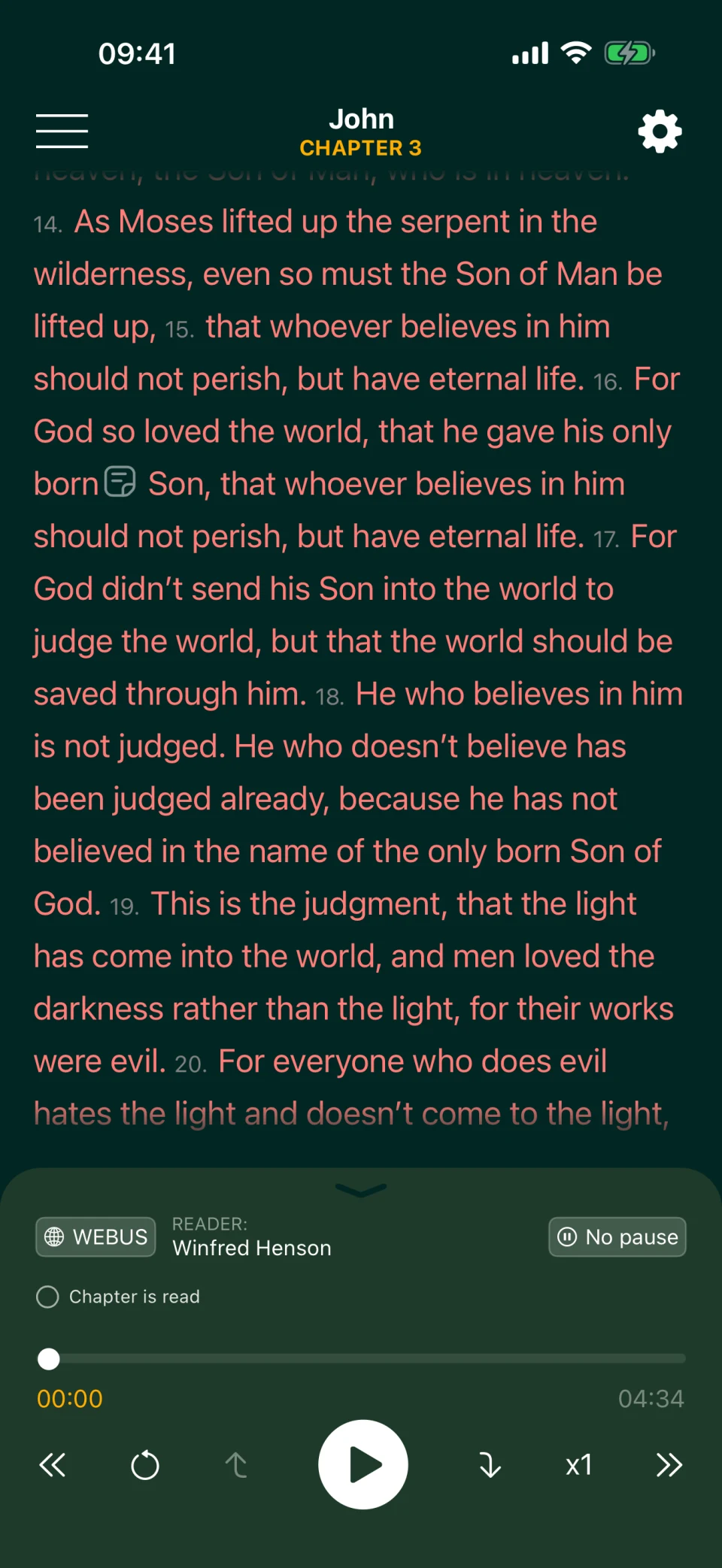
The benefit is simple: open a Gospel and you can see at a glance where Jesus is speaking. That matters most in a translation without quotation marks. The King James Version has none, so red letters do the work quotation marks do in modern versions. They also help untangle quotations nested inside other quotations (Bible Collectors' World).
Critics raise two points. The first is theological: red ink can suggest that Jesus' words matter more than the rest of Scripture. Red ink did not create that view, but it gives it a name: Russell Moore describes "red-letter Christianity" as the belief that Jesus' words "are more authoritative than the rest of the Bible and can override theological or ethical teaching found in, say, the Old Testament or the Pauline Epistles" (Christianity Today, 2022). The second is practical: red type is harder to read, which is why some large-print Bibles are black-letter only.
So if you are choosing a printed Bible, pick red letters if you want to find Jesus' sayings quickly, and black letters if you find red tiring to read or simply prefer an unmarked page. The text is the same either way.
Underneath both points lies a simple fact: the ancient New Testament manuscripts have no quotation marks and no red ink. An editor decides where Jesus' words end, so red letters are already an interpretation.
Where do Jesus' words end? Editions disagree
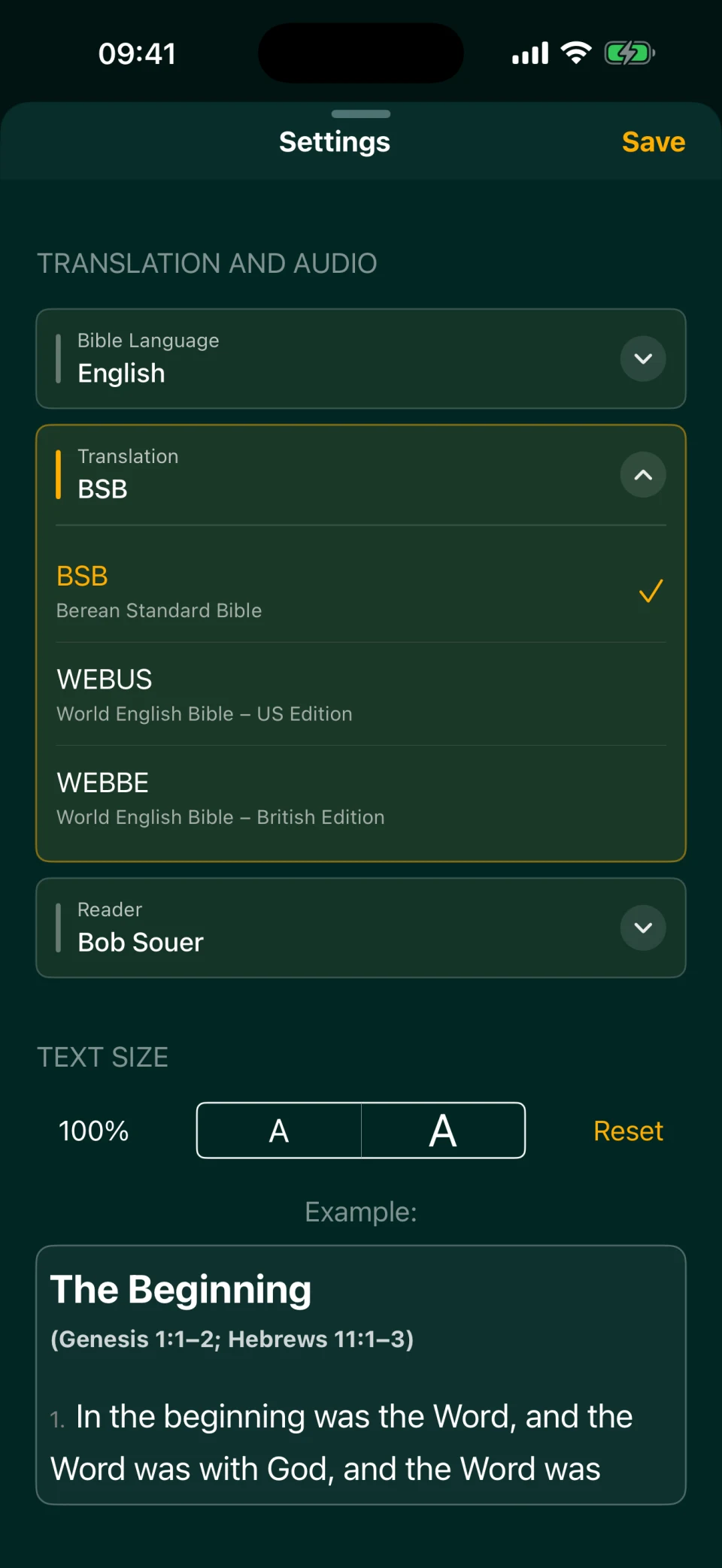
You can see this by comparing the two English translations in the app. They mark the same scenes in red but sometimes make different calls:
| Passage | BSB | WEB | The question |
|---|---|---|---|
| John 3:16–21 | red | red | Is Jesus still talking to Nicodemus, or is this the Gospel writer's reflection? |
| Matthew 27:63 | red | black | Jesus' words, but quoted by the chief priests |
| 1 Timothy 5:18 | black | red | Paul quotes "The laborer is worthy of his wages," which Jesus says in Luke 10:7 |
| Hebrews 10:5–9 | red | black | The author puts Psalm 40 in the mouth of Christ, who speaks it "when Christ came into the world" |
| Revelation 1:8; 21:5–8 | black | red | "Says the Lord God," "He who sits on the throne": the Father or Christ? |
The best-known debate is over John 3:16, "For God so loved the world…" The Greek text does not show where the conversation with Nicodemus ends, and interpreters differ (Wikipedia). The NIV (not in the app) closes the quotation after verse 15 and adds a note: "Some interpreters end the quotation with verse 21" (BibleGateway). Both BSB and WEB in the app keep verses 16–21 in red, while the app's Ukrainian New Translation (NPU) stops the red at verse 15.
None of these choices is simply wrong; they are different readings of the same text. Which is a good reason to remember that the black words around the red ones are Scripture too.
Where Jesus speaks outside the Gospels
Nearly all red verses are in the Gospels, but not all of them (quotations from the BSB):
- Acts: the risen Jesus speaks to the disciples before the Ascension (Acts 1:4–8) and to Saul on the road to Damascus (Acts 9:4–6). In Acts 20:35, Paul quotes a saying of Jesus that the Gospels do not record: "It is more blessed to give than to receive."
- The letters: the words of the Last Supper in 1 Corinthians 11:24–25 and the answer Paul receives, "My grace is sufficient for you" (2 Corinthians 12:9).
- Revelation: above all the letters to the seven churches (Revelation 2–3) and the last chapter.
In the app, 2,048 verses of the BSB contain words in red: 1,946 in the Gospels, 31 in Acts, 8 in the letters, and 63 in Revelation. In the WEB, 2,059. There are no red letters in the Old Testament, just as in Klopsch's edition.
A red-letter Bible app: Bible Garden
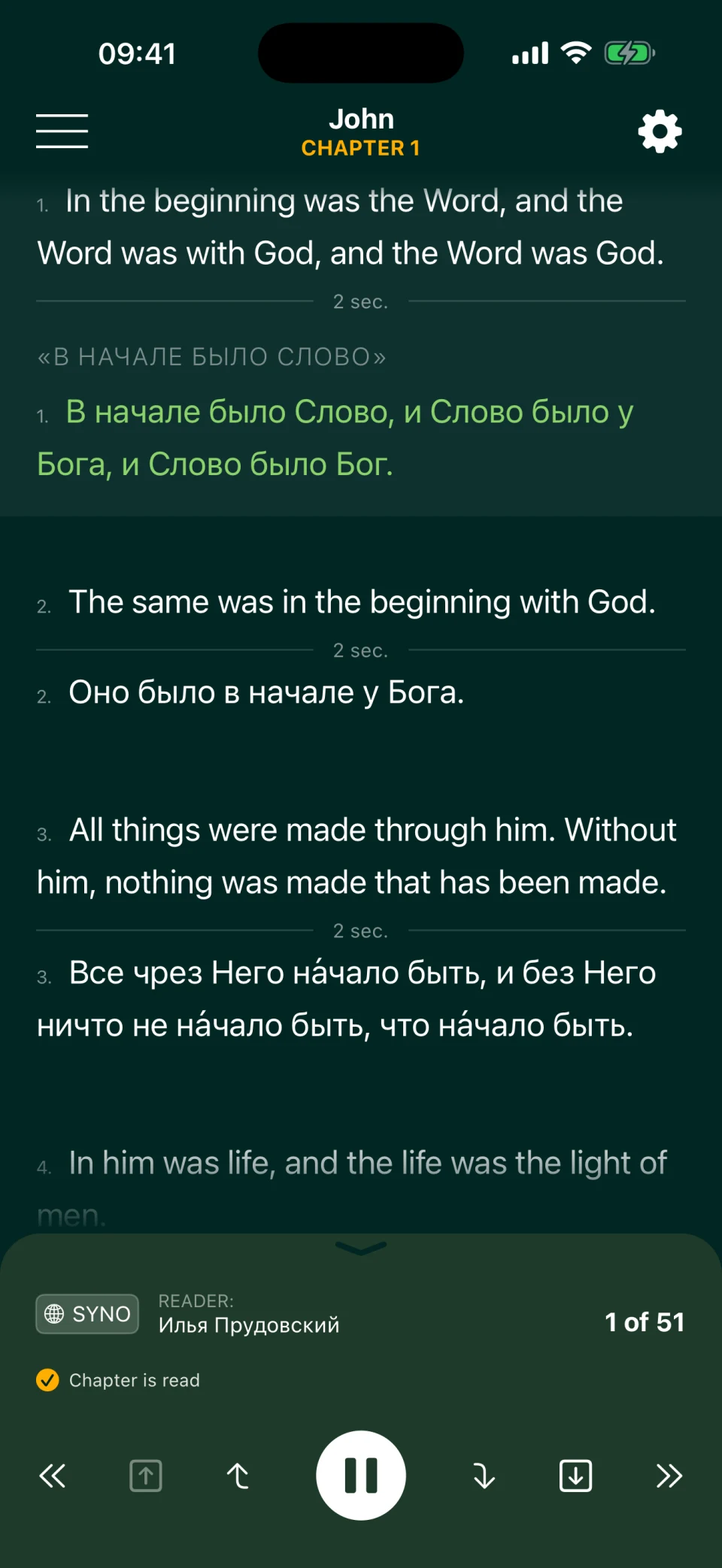
Bible Garden shows the words of Jesus in red in all seven translations: the BSB, the American and British editions of the WEB, two Russian and two Ukrainian translations. Red letters appear in regular reading and in Multi Reading, whether you read or listen.
We did not mark the boundaries ourselves. They come from marked-up digital editions of each translation, and the verse text itself is unchanged. That is why translations sometimes disagree, as in the table above. For how the translations themselves differ, see Which Bible translation is best?
To see the differences for yourself, turn on Multi Reading with the BSB and the WEB. Each verse plays in both translations, one after the other, and under every verse the screen shows the same verse in the other translation, with its own red letters. You can also pair English with Russian or Ukrainian; see Read and listen in two languages.
You can also just listen in regular reading. The BSB is read by Bob Souer or David, the American WEB by Winfred Henson, and you can hear a sample of each voice before choosing; more in Who reads the audio Bible. The verse being read is highlighted. The app is free, with no ads or in-app purchases; a web version and Android are in our plans.
Frequently asked questions
Who started printing the words of Jesus in red?
Louis Klopsch, editor of The Christian Herald. The idea came to him on June 19, 1899, while reading Luke 22:20, the words about the new covenant in Christ's blood. A red-letter New Testament came out that year and a complete Bible in 1901.
Does red mean Jesus' words are more important than the rest of the Bible?
No. The color only helps you find Jesus' direct speech. Critics object to red letters precisely because they can suggest a "main" and a "secondary" text, while "all Scripture is God-breathed" (2 Timothy 3:16, BSB).
Are there red letters in the Old Testament?
Not in Klopsch's editions: he deliberately left Old Testament appearances of God in black. In Bible Garden, too, red letters appear only in the New Testament.
Why do different Bibles put different words in red?
Because the ancient manuscripts have no quotation marks, and editors decide where Jesus' words end. John 3:16–21, for example, is red in some editions and black in others. Even the BSB and the WEB in Bible Garden differ in several places.
Is there a red-letter Bible app with audio?
Yes. Bible Garden for iPhone and iPad shows Jesus' words in red in the BSB and the WEB and reads every verse aloud, with the current verse highlighted. It is free, with no ads.
Can I turn red letters off in Bible Garden?
No, there is no such setting: the words of Jesus are always in red, in every translation and in both reading modes.